Showing posts with label Genre: Short Stories. Show all posts

Saturday, 17 March 2018

Cry Your Way Home by Damien Angelica Walters

Title: Cry Your Way Home

Author: Damien Angelica Walters

Date Read: 2.March.2018
On TBR for: 8 days
TBR status after reading: 269 books to read (TBR expected to be cleared in 2036)
Format: Ebook - ePub format
Source: LibraryThing Early Reviewers
Challenges: Pace yourself; Keep things balanced

LibraryThing Early Reviewers
 This review was written for LibraryThing Early Reviewers

"Once upon a time there was a monster. This is how they tell you the story starts. This is a lie."

So starts Cry Your Way Home, a collection of short stories by Damien Angelica Walters. These stories span from fairy tale-like to science fiction to magical realism, with the common thread of being dark, dealing with loss and grief, dealing with monsters (allegorical or not) and things that go bump in the night.

Most of the 17 stories in this collection were enjoyable - only a few didn't quite work for me. The opening story, Tooth, Tongue, and Claw, had me worried that there wouldn't be a happy ending, that that would be the tone of the entire collection. But while most of the endings are not happy, this one included, they are not grim and dark and full of hopelessness has I had feared. In most of the cases there is some kind of closure to be had.

And still speaking of endings, a few of the stories felt incomplete, like the actual story had just started and then it ended. Two others were a variation of this: they felt as the start of something great, something that I would love to read in a longer format. The Serial Killer’s Astronaut Daughter feels like this, and so does The Floating Girls: A Documentary, but the latter still works very well as a short story and was my favourite of the book.

Although some of the stories weren't totally to my liking, I enjoyed this book. It was well written, and vivid enough to leave me with that pleasant-unpleasant feeling in the pit of my stomach that something terrible was about to happen.

Rating: 4 out of 5

Quotes I enjoyed:

Is a final word even important if no one hears? Is a final apology meaningful if every preceding action says otherwise?
You think it’ll kill you, but it’s a hell of a lot more clever than that because it lets you live. Only thing you can do is give it the finger and move on as best you can. Only thing anyone can do.
It’s the sort of floor on which a girl could dance a pirouette and a woman, a waltz. I do neither, afraid I might trip over my own aspirations.
Autumn, like Alzheimer’s, turns everything strange and unfamiliar, and when you look for the shape of the real hidden within, you find only a promise of the winter to come.
This is the way the world breaks you. It takes everything you know and love and turns it inside out. It leaches the color from your hair, yellows your teeth, and curves your spine, and even though you wish you were the same person you’ve always been on the inside, you go grey and stained and frail there, too.


Other Reviews: Vegan Daemon

This Book on: LibraryThing | GoodReads | BookDepository | Amazon UK

Friday, 23 December 2011

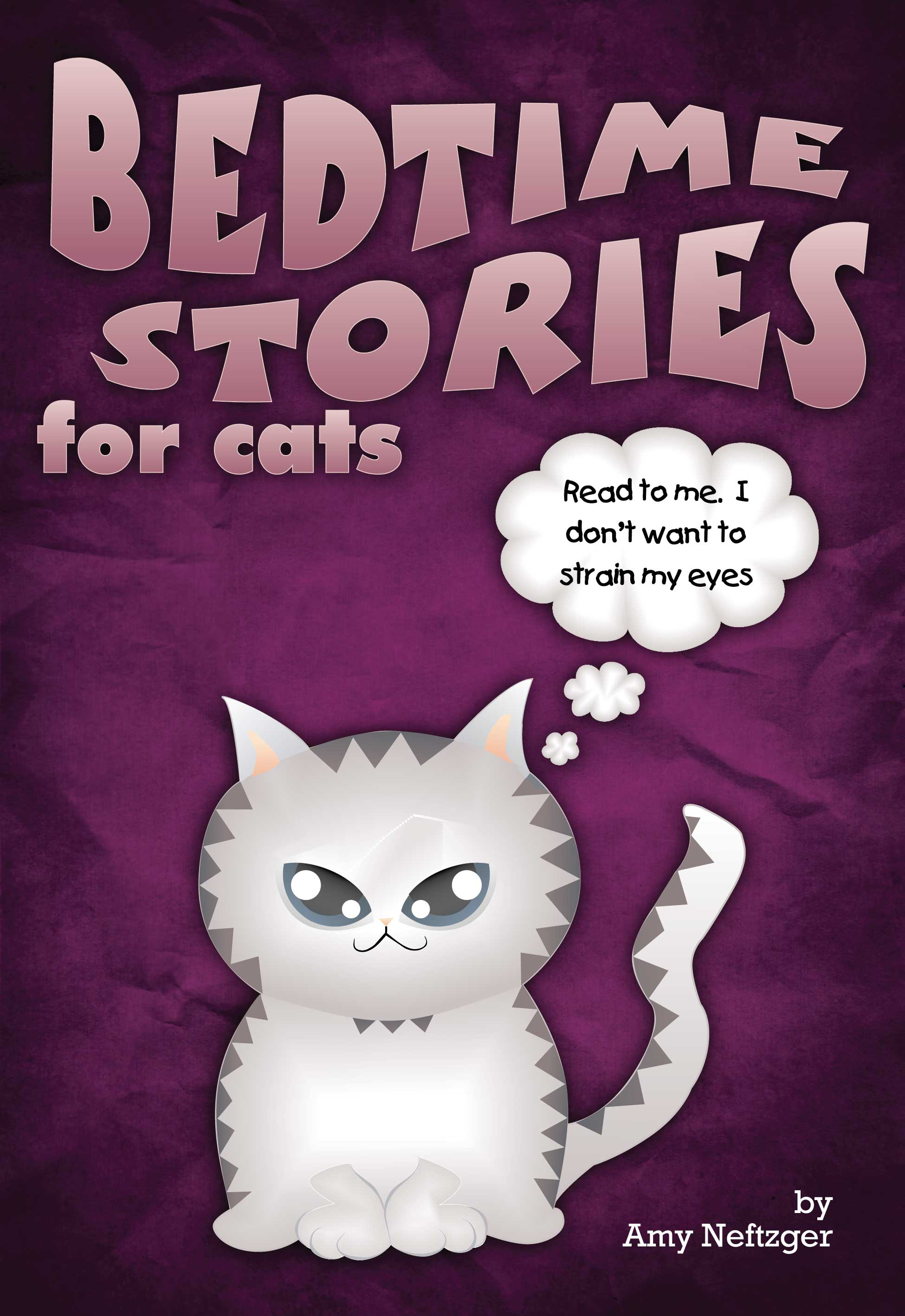
Bedtime Stories for Cats by Amy Neftzger

I received this book in ebook format from the Author, through LibraryThing Member Giveaway

Bedtime Stories for Cats

Bedtime Stories for Cats is a book of short stories and fables designed specifically for cat lovers. The topics range from mythology to magic and horror stories (for cats) combined with a few essays written by a cat in order to help the rest of us understand their logic and reasoning. The book also includes a creative retelling of the Gingerbread Man from a cat’s perspective. You share so much with your cat, why not read together, also?

Bedtime Stories for Cats is a collection of short stories and essays, with cats as a central point. In fact, many of these tales (called Tails in the book), are written in the feline point of view – especially when it comes to baths. And feeding. And ruling the world. And being the centre of the Universe.

The stories were amusing, some playing with cats stereotypes, some going into mythology. And speaking of mythology, the first Tail is a kind of creationism myth, but I had a problem with it – you see, cat's here are portrayed as defenders of order (unlike those unruly dogs). But orderly is not the first adjective that comes to my mind when I think of cats. It's not even the 100th - at least not with my cats.

Since I brought up my cats, I have to say I didn't try the stories on them. They have no trouble falling asleep (and there is not a proper bedtime for them - it's all hours of the day unless everyone else in the house wants to sleep), and unless the speech includes the words Ham, Chicken or Tuna, they really don't care what I say.


Rating: 3.5 out of 5

This Book on: LibraryThing | GoodReads | BookDepository UK | Book Depository US | Amazon UK (Kindle)| Amazon US (Kindle)| Wook

Wednesday, 14 December 2011

The Trees: A Collection by Todd Brabander

The Trees: A Collection

I received this book in ebook format from the Author, through LibraryThing Member Giveaway

Monsters, legends, and things that we would rather not think about, this collection of three short stories and two pieces of flash fiction will treat readers to a strange and frightening world that lies in the shadows of the Pacific Northwest.

The Trees is a collection of short stories and flash fiction by Todd Brabander. All the stories share a certain surreality and horror, but they are different from each other

Laroche, the first one, is spooky. Something about the setting, and the description made my hair stand, as if something bad was going to happen. I was not wrong. A nice story that mixes myth and everyday life.

Happiness Is A Dead Ladybug is rather stranger and rather sweet at the same time. Very short, a dialogue between owner and robot, that could have easily been between mother and a 4-year old.

I liked Sheltered, although I kind of guessed the ending almost from the start. Still, it was a good story.

The tittle story, The Trees, was also a good story. This had a feel of a folktale, of tricksters and and riddles. It even had a bit of humour. And a gruesome ending, but that made the story.

And the last story, The First Date, was the WTF? moment of the book. Really, did the author forget to finish this? It didn't feel like a story at all.

I enjoyed this book, but it was just a taste of Todd Brabander's writing. I liked the longer stories more than the flash fiction. I will be on the look out for more of his work, hopefully longer stories than the ones in The Trees.


Rating: 3.5 out of 5

This Book on: LibraryThing | GoodReads | Amazon UK (Kindle)| Amazon US (Kindle)

Wednesday, 26 October 2011

Stories edited by Neil Gaiman and Al Sarrantonio

Stories
Stories, an anthology edited by Neil Gaiman and Al Sarrantonio, takes as starting point their love for good stories and good writing, and 4 words: ...and then what happened? I had my eyes on this book ever since it came out – short stories, some great authors (even if the combination of some seemed strange at first), and a cute cover.

Stories starts with Blood by Roddy Doyle, that is quite upbeat and funny, even if slightly disturbing – I enjoyed it but the ending didn't quite work for me. But the second story, Fossil-Figures by Joyce Carol Oates, more than made up for it. Fossil-Figures is a story of twins, different from what usually is done, poignant and dark – but what really captivated me was the writing, that conveyed the feelings of both the characters so well. I admit never having heard of Joyce Carol Oates, but it won't be the last I'll read something of this author.

The next three stories (Joanne Harris's Wildfire in Manhattan, Neil Gaiman's The truth is a cave in the Black Mountains and Michael Marshall Smith's Unbelief) could have been part of American Gods, and if that is forgiveable in the case of Neil Gaiman, with the other two not so much. Joanne Harris story was still enjoyable for the movie(or TV-series)-like quality of it, fun, with action and a hint of romance. Neil Gaiman's didn't really convince me more because of the writing than the story itself. Unbelief is a cutesy story, with a twist towards the end that made me smile a bit, but not much more than that.

The stars are falling by Joe R. Lansdale is a strange case, because although I can't say I specially liked it, it was memorable enough to still have me thinking about it (more than a month after reading it). It's dark and sad, like many of the stories in this book, but strangely uplifting in the end, despite the grimness of it.

Walter Mosley's Juvenal Nyx starts really slow and boring, and once it starts to be interesting to me, it pick ups the pace and finishes in a flash. As a vampire story it is different from usual, and had it been more like the ending part, it could have been phenomenal.

After Richard Adams's story The Knife I think I am ready to give up on this author, neither writing nor story were to my liking, and the only plus side was that it was extremely short.

I was surprised to see Jodi Picoult in the list of the authors, the few names that I was acquainted with screamed Fantasy and Science Fiction to me, Jodi's didn't. But I'm glad she was included, her story Weights and measures was extremely sad, but extremely well written. About the death of child and the grief of parents, I didn't expect to enjoy it, and certainly not as much as I have.

Michael Swanwick's The Goblin Lake was fairy tale like at first, jumping into metafiction later on. But it never really convinced me, and to tell the truth, the new-comer Kat Howard manages much better the metaficiton in her story A Life in Fictions, which was really good.

Mallon the guru by Peter Straub was another story that didn't work out for me, the same with Stewart O'Nan's Land of the Lost, Carolyn Parkhurst's Unwell and Tim Powers's Parallel Lines (these last two with some similarities, as well as with Fossil-Figures that had already stole my heart).

Lawrence Block's Catch and Release and Jeffery Deaver's The Therapist were both rather good, both showing the darker side of human nature. In the first we share the thoughts of a serial killer that has somehow changed his modus operandi, never giving up the chase of prey. In the second story it takes awhile to realize how dark it is, and since there is an element of fantasy there, the reader is doesn't quite know what to believe.

Jeffrey Ford's Polka Dots and Moonbeams, Chuck Palahniuk's Loser and Jonathan Carroll's Let the Past Begin were nice stories, with some degree of craziness and surrealism, which is always a bonus for me, but not exactly memorable.

Samantha's Diary by Diana Wynne Jones was my favourite story in the book – a retelling of the popular 12 Days of Christmas, set in a futuristic world were such song is almost forgotten. This one made me laugh out loud (I swear, true story). I wish there was a bit more to its ending, but anyway, it is a brilliant story.

Leif in the wind by Gene Wolfe was another poignant story, a science fiction one, and I enjoyed it immensely.

Al Sarrantonio's The Cult of the Nose is another slightly surreal one, that had the power to actually make me believe in the conspiracies and secret society that the main character was involved on. The ending was also quite twisty, leaving it open to the reader to believe in either side of the story.

Human intelligence by Kurt Andersen was another science fiction one, and with quite a big twist in the end that left me with a smile in my face (a much bigger one than in Unbelief). I rather liked it.

Stories by Michael Moorcock was tremendously strange to me, because it didn't feel like a story to me – just the author talking about the past and people that I always felt I was supposed to know who they were but I had no idea who they could be. For the most part it made me feel stupid, because surely these should be really famous authors and magazines and what-not. But slowly I became somewhat invested in the characters, especially the one we know from the beginning what will happen – I guess I want to know how he got there.

Elizabeth Hand's The Maiden Flight of McCauley's Bellerophon was a nice one as well, rather long, which made me feel it could have been a novel. I wish there was a better explanation to some of the events, but overall it was good.

The Devil on the Staircase by Joe Hill is the closing story of this book, with a different kind of layout. As the main character goes up and down the many stairs of his village, so does the text resemble them. It made it a bit hard to follow the story, but it was nice all the same.

My overall opinion of Stories was that it was somewhat of a disappointment: even if there were stories that I loved, they were few and the ones that didn't interest me one bit far too many. Regarding the central point of ...and then what happened? of all the stories, I felt the great majority of cases that I was asking that because the story had an unfinished feel to it, not because I really wanted to know more about it.


Rating: 3.5 out of 5

This Book on: LibraryThing | GoodReads | BookDepository UK | Book Depository US | Amazon UK| Amazon US| Gam.co | Wook

Wednesday, 25 May 2011

El menor espectáculo del mundo by Félix J. Palma

El menor espectáculo del mundo [The smallest show in the world]
This book is only available in Spanish

This a collection of short stories, a bit like snapshots into everyday life, where the surreal, strange and fantastical seems to enter. A lot of the stories deal with problems of marriage, of disgruntled couples, and betrayals. Most are about problems of the heart, whether in married couples or not. A few give an outlook into the life of elders, and their solitude.

I liked a lot of this stories, some I even loved. The first one El País de las Muñecas [The Country of the Dolls] opens us to a world not of not exactly magic, but magical nonetheless, exploring the father-daughter relationship. It's ending surprised me for its brutality and, even if part of me thinks it's a bit out of place, I don't think I could have it any other way.

Margabarismos starts off with a brilliant description of Veronica, the neighbourhood bar, and it's toilet. It's a strange story at first, and I wasn't much impressed, but as surreal things started to happen, I became more and more invested on the story. In a way, I'll say it makes sense. As far as a story where a dead uncle communicates with his nephew through messages written on a bathroom door of a shabby bar can make sense.

Una palabra tuya [One word from you] is quite dramatic, but an excellent story. It draws on the idea that sometimes kids think their parents are superheroes and that parents will try to prove them that they can indeed be heroes. This is a story that gets better and better as you go along, each shenanigan making you more in love with the main character. The ending on this one was perfect.

Maullidos [Meows] is, in itself, a love story. Only you just discover it in the end. It could have been longer, I'm sure, maybe then it would be more memorable, but it was pretty good this way as well.

Un ascenso a los infiernos [An ascent to hell]. This is a sad story, but also one of extreme courage. We are faced with 3 elders, who like to spend their days sitting by the Ambulance's entrance of an hospital, taking bets on what ails the people who come in. Among this we learn that there is no age limitation on failing in love, that disillusion can be fatal, and that anyone can be a hero, if they so wish to.

El síndome de Karenina [Karenina's syndrome] is a great story. There is a certain mystery to it, and you can't help but have your head whirling, trying to find the solution. The answer to this mystery is not surprising, but not obvious either. But what makes this story even better is its conclusion, a way to show that not all love stories end like we think, without it being a bad thing. 

El valiente anestesista [The valiant anesthetist] shocked me profundly and I have to say I didn't like it. It was a bit confusing, but more than that I didn't like the idea of a mother telling her daughter what kind of bastard her father was, in the guise of a fairytale. I understand completely the way of this story, and I do agree that life is not a fairytale but, damn, I still want to be told it is.

Las siete vidas (o así) de Sebastián Mingorance [The seven lives (or so) of Sebastián Mingorance] adds quantum physics to fantasy, a combination that is always sure to please me. The idea of this story and, in part, its execution, was extremely good. The main character, however, I didn't quite like, none of his incarnations.

And the best way to end a book of short stories, is to end with the best one, and the most bittersweet one. At least it was in this book's case. Biblelot [Trinket] gives us a peek into the solitude of old age, and what people do, sometimes in the spur of the moment, to lighten that weight and give some joy where there seems to be none.

In general, I loved this book. But it was not so much for the stories (although there are some really good ones), but for the writing style. In The Map of Time I realized that Félix Palma has a gift with language, and this book was no different. It didn't matter what it was about, the way it was told made want to keep reading. I kept thinking, it's just words, the same words every other author uses, but Palma is like a magician and these same words are transformed into a text that you can't help but marvel at. Even if this text is describing a pretty gross bathroom.


Rating: 4.5 out of 5


This Book on: LibraryThing | GoodReads | BookDepository UK | Book Depository US | Amazon UK| Amazon US