Showing posts with label Genre: Historical Fiction. Show all posts

Monday, 5 December 2011

The book thief by Markus Zusak

The Book Thief
The setting is Germany 1939, and the narrator is Death. That was the reason I didn't read the book sooner. Didn't matter the many reviews singing its praises and telling there was humour in it. So, why did I read it? A read-along with Jen from Cuidado com o Dálmata and p7 from Bookeater/Booklover.

And yes, it's set during World War II, and in no way the author sugar-coated any of it. There is Death and deaths aplenty, like expected. And like all the reviews seemed to point to, it was a really good book.

The voice in which Death (and here I was expecting Terry Pratchett's DEATH) tells the story is rather unique. A mixture of satirical and resigned acceptance of the human nature. I really loved the way Death described the colour of the sky, how it changes – I think I'll never look at the sky quite in the same way.

Death also loves spoilers, and starts this book by telling the three moments she meets with Liesel, the star of this story. The first time, and this is when the story-proper begins, Liesel is 9, and she just lost her brother when they were on their way to Molching to be adopted by Mr. and Mrs. Hubermann. Liesel has her first encounter with Death, but also her first moment of thievery, for she is The Book Thief.

And so begin the adventures of Liesel in Himmel Street. Her new Mama, Rosa, is a source of new vocabulary, specially in terms of insults. Papa Hans is a wonderful man that eases this little girl into her new life, with his accordion, and late night vigils. And then there is Rudy, who dreams he is Jesse Owens and tries time and time again to win a kiss from Liesel. But there are more characters, of course. Late additions include the mayor's wife, who helps the Book Thief have access to books, in more ways than one; and Max, the Jewish fist-fighter, who comes collecting an old promise, and brightens Liesel's life. The characters are amazing, but I have a special fondness for Rudy, Hans and Max. They help Liesel, each in their own way, and each of them has their own strengths.

But let's not forget this is set in World War II. I'm not fond of that period of history, and I usually don't like literature about it. There are exceptions, of course (Everything is Illuminated is one of them, but probably because it focuses so little on WWII), and this book just joined the club. I really liked that we had a view of German families, not Jewish, and not exactly wealthy. And how some, fitting the superior race profile, didn't really care for Nazi politics.

The writing style was another thing that I also liked. It was concise (some would say choppy), but in a few words the author managed to write beautiful and so truthful sentences. I also loved the little asides, that presented the facts, or definitions, needed to continue with the story, without really breaking its flow.

I enjoyed the book a lot, a good book, I kept thinking throughout the first 9 parts of it. But it was the 10th that did it. It's tragic and sad, and for once I was glad of Death's spoilers, I could ease my heart a bit, getting ready for what was to come. Yet it caught me by surprise, and oh, how my heart ached with Liesel's. Fear not, there is a bit of an happy ending. And speaking of endings, this is a book that ends beautifully – with Death saying: “I am haunted by humans.”

Jen's Review

p7's Review

Rating: 4.5 out of 5

Other Reviews: Estante de Livros | The Broke and Bookish

This Book on: LibraryThing | GoodReads | BookDepository UK | Book Depository US | Amazon UK| Amazon US| Wook | Wook

Thursday, 10 November 2011

North and South by Elizabeth Gaskell

North and South
When her father leaves the Church, Margaret Hale is uprooted from her comfortable home in Hampshire to move with her family to the North of England. Initially repulsed by the ugliness of her new surroundings in the industrial town of Milton, Margaret becomes aware of the poverty and suffering of local mill workers and develops a passionate sense of social justice. In "North and South", Gaskell skillfully fused individual feeling with social concern and in Margaret Hale created one of the most original heroines of Victorian literature.

After having watched and re-watched (and re-watched and re-watched and...) the BBC adaptation of North and South, it was only right that I should read the novel. Mind you, it was something I meant to do since the first time I saw it, oh so many years ago. And after a North and South marathon with a friend (until the wee hours of the morning), the book reading was my next step.

So, it was with a solid knowledge of the story and clear favourites among the characters (Oh, Mr. Thornton...) that I started. One of the things that I first noticed was the language and the portrayal of Margaret, the main character of this book. I quite liked Margaret in the series, but on my first acquaintance with her in book form I found her a bit petty and snobbish. I knew she would change, but it did shock me. But petty and snobbish as she was, and much due to the amazing writing of Elizabeth Gaskell, I didn't see her as a thing of the past, she was not simply a character of a book, and outdated at that. In a few pages Margaret was a real person, and wouldn't be at all out of place in our days. And the same could be said about the writing. Not old fashioned at all, and together with the characterization of Margaret, I could forget this was set in the 19th century.

Enter Mr. Thornton, who in the series is beautifully portrayed by Richard Armitage and I thought couldn't get any better. Well, I was wrong. For, something that is less common in the books that are written nowadays, in North and South we can see both actions and feelings (and thoughts) of all the characters, not just the central one. John Thornton, who to Margaret is a stiff, unfeeling master of the North (and in trade *shock, gasp*), when shown to us in the company of his family and friends proves to be an intelligent, honest and fair man, even if he is set in his ways. Really, the man has his faults, like everyone else, but all in all, he a fine man.

Amidst the struggle of a factoring town, of poor conditions to workers, whom Margaret befriends and helps, and the heavy hand (and sometimes sneaky) of the masters, of talks of strikes and a lot of death (seriously, Mrs. Gaskell, was there need for so many?) there is a love story between these two. Not without its bumps (it couldn't be that simple, now, could it?), but it was fun to follow it, even if at times it broke my heart (poor, poor, Mr. Thornton).

But back to the struggles of the poor. Even if in the case of the Higgins, Margaret's working friends, I prefer their TV counterparts (especially Bessie, who isn't so fervours in her religion on screen), I liked that part of the story. It was a look into the past, of the hardships of those who had to work in conditions that would undoubtedly kill them, and how the priorities of life were different from those of Margaret, for instance.

There are, of course, a couple things on this book that I wish that would be different. First, towards the end, when Margaret leaves Milton, much of what happens there stops being told, and I kept wishing to know how those left behind fared. And second, the ending. Oh, it is a very good ending, that made me laugh. But could I please have another chapter? Just a tiny little one? Please? Because I want more!

Summarizing (or not really): a very good book, a classic no doubt. I loved the writing (so much that I could only follow this book with another one of Mrs. Gaskell), and the story. Read this book, and watch the series. Both totally worth it.


Rating: 5 out of 5

Other Reviews: A Few More Pages | Cuidado com o Dálmata | Estante de Livros |

This Book on: LibraryThing | GoodReads | BookDepository UK | Book Depository US | Amazon UK| Amazon US| Gam.co | Wook | Project Gutenberg | Librivox

The Series on: Amazon UK| Amazon US| Gam.co

Thursday, 21 April 2011

Cathedral of the Sea by Ildefonso Falcones

Cathedral of the Sea
Cathedral of the Sea follows the fortunes of the Estanyol family, from their peasant roots to a son, Arnau, who flees the land only to realize spectacular wealth and devastating problems. During Arnau’s lifetime Barcelona becomes a city of light and darkness, dominated by the construction of the city’s great pride—the cathedral of Santa Maria de la Mar — and by its shame, the deadly Inquisition. As a young man, Arnau joins the powerful guild of stone-workers and helps to build the church with his own hands, while his best friend and adopted brother Joan studies to become a priest. When Arnau, who secretly loves a forbidden Jewish woman named Mar, is betrayed and hauled before the Inquisitor, he finds himself face-to-face with his own brother. Will he lose his life just as his beloved Cathedral of the Sea is finally completed?

What a long read this one has been - 3 months with one book! Definitely not normal for me. I don't know if it was reading it in a new language, or the fact that it is indeed a big book or the story itself, but this one just kept going on and on.

I've read other books while reading this one, usually picking them up because I needed something lighter to read. But that doesn't mean I wasn't liking it. Because I did like it, but can't really say I loved it, either - it was an ok book, full of drama, and intrigue.

As a piece of historical fiction it is great, and it's greater still because I am in the city where it takes place - streets and villages are familiar to me, and I could get a sense of what and where it was happening.

But I think in the end it ended up being too much drama and too long for me to properly enjoy. I liked it while reading, but didn't have an overwhelming urge to know what was going to happen next. But I was able to pick this one up at random times and stop reading for a long time without really losing anything. It is kind of memorable, and but all so pretty much meh...

There must be have been a lot of research made into this (there is a long author's note at the end where I think he explains all the research and where ideas come from, but, surprise surprise, I didn't bother to read), and it shows. But when the fiction begins, and especially with the characters, it falls a bit flat. The characters had depth, and were well thought, but I just couldn't relate with them. Any of them. Which is really sad.

It's a long epic book, and it's quite good in its genre, but the truth is that it didn't pull me in like other books usually do.

Rating: 3.5 out of 5

This Book on: LibraryThing | Goodreads | Bookdepository UK | Bookdepository US | Amazon UK | Amazon US | Gam.co

Tuesday, 5 October 2010

The Map of Time by Félix J. Palma

The Map of Time is available in Spanish (El Mapa del Tiempo) and Portuguese (O Mapa do Tempo). It will be released in English on June, 9th 2011.


I was expecting great things out of The Map of Time, after reading my friend's review of it. What I was not expecting was that it would be so good and marvellous – a strong candidate to The Best Book I Read This Year.

The Map of Time defies classification, it embodies Historical Fiction, Science Fiction, Historical Fantasy, Steampunk, Mystery, Romance, Metafiction and even Biography, all of this articulated seamlessly into one book.

The setting is Victorian London, where Murray Time Travel Company offers the chance to travel to the year 2000, and see the the final confrontation between humans and automatons.

There are three main characters, as there are three stories: Andrew Harrington, who has been half-living since Jack, the Ripper murdered the love of his life, the Whitechappel prostitute Mary Kelly, and is quite ready to end that; Miss Claire Haggerty, who feels that she was born on the wrong time period, quite certain that she will never be happy; and finally H. G. Wells. The writer of The Time Machine, which is also an important book within the story, as it motivates innumerable characters to try Time Travel.

I absolutely loved this book – the plot, the characters, the writing, but most of all, the narrator. Although he was not one of the characters, he was the connection between the reader and the London in the book. His tone was quirky, and the entire book felt like a story that was being told to me, and only me. Much like an aside during a theatrical play.

It's hard to talk about the plot of this book, without giving to much away, and believe me, you wouldn't want spoilers on this one. It's full of twists and turns, so much that you end up with a general feeling of suspicion towards the author at the beginning of each part. But by the end, you'll still be in love with the story.

I can say only good things about The Map of Time, a great book, indeed.

(5/5)


Your ad here.

Wednesday, 2 June 2010

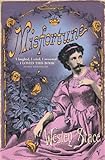
Misfortune by Wesley Stace

Misfortune

I am not sure how I came about this book. It might have been a recommendation for another book, or simply finding the cover somewhere and being drawn to it (how could I not, there is a woman with a moustache!). In any case, it was an absolute find!

Set in the 19th century it tells the story of Rose Old Loveall, from birth to death, in a memoir style, and with very quirky language. What makes this book different? Well, Rose is found by the Young Lord Loveall after being left for dead in a rubbish heap, barely a day old, and rescued to be brought up as his child, and heir to his fortune. Only Rose is a boy, even if he is brought up as a girl.

This alone made the book amazing. And no, I'm not a particular fan of gender bending or cross-dressing, but the idea of a boy raised as a girl only because her/his father refused to accept that (s)he wasn't the sex he though/wished the baby was, seemed hilarious to me.

I loved the writing style, quirky and funny, but never demeaning the story. There were parts that it was truly Dickensian. On page 15 I was already certain I would love it, by page 31 I knew it was going to be epic. Even if I never had so much trouble with pronouns since The Left Hand of Darkness. But the author was never intimidated by Rose's gender duality. When Rose thought of herself as a girl (because she believed to she was one for a long time), she was referred as such. When he finds out that, after all, he is a boy, Rose becomes a "he". No confusion whatsoever.

There is also some play on words that is simply marvellous. Some of it comes directly from the character of Geoffroy Loveall, that names Rose Old as such, to be an anagram of his beloved sister's name Dolores, and renames Rose in one of her plays, as Lord Ose, another anagram. There is also the play with the family name, Loveall, that love all, live in Love Hall, and have the motto of Amor Vincit Omnia (Love conquers All).

But even if this is quirky and funny, there are deep themes being explored, gender identity and the definition of self being some of them. Finding out that one has been lied to all their life, by their parents on top of all, can have devastating consequences, and give a sense of loss like no other. Rose goes through all of this, and there are parts of her life that remain unknown to the reader, although they are hinted at, for she is ashamed of what she has done in her despair. To add to this, there is also the loss of her right to inherit the Loveall name and Love Hall, because she was adopted. It is amazing to read of Rose's misfortunes and problems, angsty in parts, but no overly so, and how she overcomes them.

Despite this, there is a happy ending waiting for Rose, and throughout the book there are hints that it will be so. And yes, the nice plot twist in the end is expected, some would say not entirely believable, but I liked it. It fitted Rose, especially because she was referred to as Miss Fortune (another play on words), because despite all that happened she was indeed very fortunate.

Absolutely lovely.

(4.5/5)