(peeks from under the piles of books read and not reviewed, and books not read, because I just got a lot of feelings and it appears I have something to say about that)
Ahh, re-reading books. I used to do it a lot more than I do now but then again, I used to read a lot more than I do now. I know people that don't do this and are surprised that I would a) re-read a book, and b) keep a book because I might want to re-read it in the future. But for most of my reading life, I've been re-reading books that I've enjoyed, although now I prioritise new reads over re-reads (gotta keep that TBR pile tamed).
Even so, the last book I re-read wasn't that long ago. As I finally read Thick as Thieves late last year, I realised that it had been too long since I had read the last two books of the series (the first two I had re-read a few years back). Too long meaning that there were details I couldn't remember very well. The broad strokes, yeah, those I had, but with any book by Megan Whalen Turner, you gonna need more than that (seriously, even if you have it committed to memory you'll be surprised and miss things. As they say, fool me once, shame on me, fool me 5, possibly 6 times, you must be Megan). So that brings us to one of the points on re-reading: our memory is not perfect, so if a series takes say, 10 years to produce a sequel, you'll need a refresher at some point (even if it takes less than that - my memory is not what it was). So, after I finished Thick as Thieves, realising there were some things I couldn't remember, I just picked The King of Attolia the next day. And what fun it was to be thrown back in that book, with a somewhat spotty knowledge of the Conspiracy of Kings and very fresh read of Thick as Thieves.
And that knowledge of what happens next brings us to point number two: hindsight is 20/20, and when you are re-reading you really appreciate the cleverness of an author, the details and the foreshadowing that are there that you missed the first time,. You pay attention to different aspects of the story, you may skip any parts you didn't particularly like and not miss the thread of the story (or read them anyway and have an 'Oh!' moment), and you may linger on the parts that you loved, reading them again and again. You are reading the same book you've already read, but the experience you are getting is a different one altogether.
The final points on the value of re-reading, and what lead me to want to write this down, come not from re-reading a book, but from listening to an adaptation of a beloved series, which I have not returned to in a very long time (especially not the first books). I'm talking about Earthsea, and the BBC radio series adaptation from 2015. A long time ago, I said I'd wished I could read these books again for the first time (along with some others by Ursula K. Le Guin). And while reading for the first time is a very specific experience, some of these books I haven't even re-read. This is due, mostly, to fear that the magic that I associate with these stories will be lost. I'm older, hopefully wiser, with more reading mileage and with a different understanding of the world than I had when I was 12 or 15 or 22 (the world itself is a very different place too). With these fears in mind (and also the terrible track record of Earthsea adaptations), I gave the radio series a try (previous BBC radio dramas have been very good, this one was shared by a friend whose opinion I trust, and since the metro was crowded it was easier to listen than to read my current book).
And it was like coming home. That's point number 3. Most of the times I've re-read books before have been because it is a comfort read. Reading something I love, because I'm in a streak of books that don't satisfy, because life is being troublesome, or just because I need something familiar. And being back at Earthsea was familiar. Ged and Tenar speaking to each other, as the stories are recounted, that was familiar. It wasn't familiar in the sense of 'oh I know these characters and these places and these stories'. No, it was familiar in the warmth you get when you are back at home after being away for so long, the one you get when you see a good friend. It was a very emotional response that I did not expect to have.
The final point, and that somehow connects to point number 2, is that books shape who we are. They make you see the world in a different and wider way. There might be moralities in them that will guide you or make you realise that they don't work for you, but hopefully they teach you to be better, and to understand yourself better. The Earthsea books are that from me. And listening to this story again, I could see some of the building blocks of the person I've become. But also that I have lost some lessons along the way (or that I had to re-learn them in some other way), while others only now make sense to me. A different (re-)read puts things in perspective, and so does being older and the different experiences we have through life. My experience of these stories now is obviously different from my experience then, and so are the lessons I learn. It’s not a new thing that books still can teach me how to be better and help me understand myself. It is a pleasant surprise when an old favourite still manages to do that almost 20 years later, both in the same ways that it did then and in completely new ways.
And while I've enjoyed the BBC radio drama very much, I still want to re-read these books (now slightly less afraid, because the magic clearly is still there). On a similar note, I have the radio drama for the Left Hand of Darkness, which I've yet to listen to (or re-read the book - it's only been like 15 years since I've read it) and I have exactly the same fears that I had with Earthsea.

Showing posts with label Ursula K. Le Guin. Show all posts
Showing posts with label Ursula K. Le Guin. Show all posts
Monday, 25 February 2019


Wednesday, 24 January 2018
Ursula K. le Guin
 This was not the way I wanted to get back to book blogging (really, I have a draft on rebirth and challenges and whatnot started, but alas, work happened) but I arrived late at home today/yesterday, no power on my cell for at least a few hours, turned up the computer, hoping to work a bit more (presentations to prepare for a meeting the next day) only to find that Ursula K. le Guin has passed away.
And while this was something that was bound to happen during my lifetime (has happened with other authors, will happen again, certainly), I was not prepared.
The works of Ursula K. le Guin have been with me since my early teen years, and have shaped me and my views of the world in many ways. Discovering Earthsea and loving it, moving on from book to book, until there were no more left - until I decided that if there was no more fantasy, I would go read science fiction (which at that time, silly me, I believed I didn't like, and I hadn't realised that like everything else, fixed categories are mostly artificial, and I gravitate towards the spaces in between).
The Left Hand of Darkness was my choice, and it opened up worlds that I hadn't imagined (even if it is in a very gendered version, but that's the Portuguese version for you). Since then, I've tried to read everything she has written (I'm a completist), and although I've made some headway, there are still more stories, and essays, and poetry that I haven't read yet.
 |
| According to LibraryThing I have 39 works by Ursula K. le Guin (3 unread, and 3 part of omnibus edition) |
And while different books have marked me in different ways, and many of her books and stories are my favourite, one that I often remember is Changing Planes, a collection of short stories that feel more like field reports.
You see, I find myself often waiting at airports (something that didn't happen when I read it, but has been a constant while I did my masters, and now that I'm working), and sometimes I work, sometimes I read, sometimes I rush from one place to the other trying not to miss my flight, but often times I'm bored. And wouldn't it be so much fun if we could just jump to another place, see new peoples, new worlds, while we wait for another flight?
It took me awhile to understand (in fact, it took me the time of waiting a few times at an airport) that we can. We can make up our own stories and travel to that world, or make a quick stop to different ones in between the pages of a book. It can be a story that starts to present itself while you listen to a song, or a podcast, or simply starts as if by spontaneous generation. It can be a place you've been so long ago, and now you remember again, and decide to visit. And it doesn't necessarily need to be on airport. It can be while you walk to work, while you stay in line at the supermarket, waiting for your doctor's appointment,...
And maybe I don't remember the stories in Changing Planes anymore, some of them didn't feel like stories, after all, more like prompts, given by the author: Here's a world, go imagine a story in it. Or a dare: I built this world, now build yours (I've shown you mine, now show me yours).
But I remember that sense of possibilities, of different worlds. Of daring to imagine a world like our own. A world not like our own. People like us. People not like us. And in all these worlds, with all these characters, there being stories.
So the the world may be poorer now that Ursula K. le Guin has left it, but it is also extremely richer that she has lived in it.
Tuesday, 23 August 2011
Top Ten Tuesday - Top Ten Books I Loved But Never Wrote A Review For

There are a lot of books that fit this category, so I had a little trouble selecting. Some I chose because they are not very well known and deserve a shout-out.
1 - Earthsea
 Ursula K. Le Guin is one of my favourite authors, and that love started with this series. A Wizard of Earthsea was being advertised as a Harry Potter kind-of-book (despite being much older, and altogether different), and so I dove in into it. And loved it. And then I went for the next book in the series, The Tombs of Atuan, which I loved even more, and then kept reading, and reading, and discovering there were more books and short-stories.
In total there are 6 books, in which the 5th one, Tales from Earthsea, is a collection of short-stories set in the same world (and one of them a bridge between book 4, Tehanu, and book 6, The Other Wind).
Tombs of Atuan (Book 2) and Tales of Earthsea (Book 5) are my favourites, but all of them are marvellous. I love the characters and especially the world building. Bonus points: Dragons!
2 - The Hobbit by J.R.R. Tolkien
 I will probably make a proper review of this one because I plan on re-read it soon.
 The Hobbit was not my first Tolkien book, I had just finished The Lord of the Rings, and I NEEDED MORE! MORE! So, I read the Hobbit. The Hobbit was the first book that I read in English (besides picture books), but since this is, in essence, a book for children, it wasn't much of a problem.
Reading The Hobbit after reading The Lord of the Rings (plus all the annexes) means I knew part of what was going to happen, at least relating to the One Ring. But there is so much more to this story than just Gollum and Bilbo. I loved every bit of it!
3 - The Left Hand of Darkness by Ursula K. Le Guin
 After being finished with the first books of Earthsea I went to look at everything else that Ursula K. Le Guin wrote, and found out most of it was Science Fiction. The problem was I was under the impression I didn't like Science Fiction (in truth what I don't like is Space Opera, but I only learnt the difference much later). I gave The Left Hand of Darkness a try, it had a cool name.
And I loved it. In a way it was a good book to start, there are just some references to advanced technology and other planets, the plot is all set in Winter (the planet, in constant winter, hence its name), and deals with social and political issues. So, the only thing different from a non-science fiction book was that it was not on Earth, and most of the characters were not human.
The thing that sold this book to me was actually the natives of Winter. They were pretty much like any Earthling, except that they are androgynous and asexual for most of their lives, until they get to the reproductive phase when they can either became male or female. The complexity of relationships and how the entire society was based on different physiological features was the high point of this book.
4 - Everything is Illuminated by Jonathan Safran Foer
 This started with a band, Gogol Bordello. It's lead singer, Eugene Hutz, plays Alex in the movie based on this book, and some of their songs are on the soundtrack. So I watched the movie, and it's a favourite of mine. So I had to read the book.
If the movie is wacky, the book is wackier, crazier, but also more bittersweet. In the book there are 3 stories: Alex's story, the (dubious) history of Jonathan's ancestors, and Alex's letters to Jonathan, mostly commenting on his own story, but also commenting (and complaining) about Jonathan's version of his family history.
I loved this book. A lot.
5 - Voice of Fire by Alan Moore
 Alan Moore is known for his graphic novels, but my first contact with his work was this book. It's a mixture of historical fiction and fantasy, and really surreal and weird. Good weird. It's a collection of short-stories, set in the same point in space (that point being Northampton, England) but spanning 6000 years.
The first story/chapter of this book is something I have to talk about. Set in 4000BC, the narrator/main character has a limited vocabulary and very little grammatical coherence. Meaning that it's a hell to try to understand what is going on at all. It's more like a detective work. But that is part of the fun, trying to figure out what is going on. I also have to applaud the Portuguese translator, because translating gibberish and maintaining its little sense while not losing its gibberish quality is a huge feat.
The rest of the stories are really good, some irreverent, some sad. One of these days I will re-read this book.
6 - The Lord of the Rings, The Silmarillion and The Unfinished Tales by J.R.R Tolkien
 ...or anything related with the Lord of the Rings.
 I love the world building of Middle Earth, and the way that The Silmarillion is a History book for the whole thing.
The story of Lord of the Rings is really gripping, and while reading it I felt immense joy and despair. That is actually one of the reasons I have trouble re-reading it, I can't get through Bilbo's birthday party knowing how much bad it gets towards book 3. But there is really not much need for another Lord of the Rings review, so I'll just say: it's good and I love it.
7 - Books by Juliet Marillier that I haven't reviewed (yet)
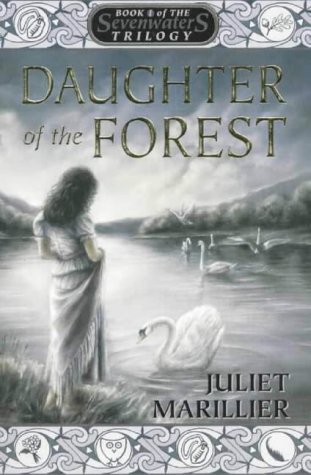 I love this author, and I have reviewed some of her books, some because I read them not so long ago, others because I re-read them not so long ago. But there are are still a lot of them that I love and have yet to do so. Namely, The Daughter of the Forest, The Child of the Prophecy, The Heir to Sevenwaters, The Light Islands Saga and the Wildwood books.
 I will most certainly re-read those in the near future, so I might review them then. Suffice to say, I love them all.
8 - American Gods by Neil Gaiman
 Fantasy with mythology, and very dark, this one was right up my alley. It has some interludes, or short stories inside the main story, that were weird and disturbing, but my overall opinion of this book is WOW. There is a grittiness to it that I particularly liked.
The main character, Shadow, took some time to get to know and like, but there is an assortment of secondary characters that are simply amazing.
9 - A Segunda Manhã do Mundo by Manuel de Pedrolo [not available in English, original in Catalan: Mecanoscrit del segon origen]
 This was another book I picked up based on the title alone. The second morning of the world, as translated in the Portuguese version. And it's a name that summarizes well this short book. It's a post apocalyptic story, about two kids that survived the apocalypse, and how they manage to survive (and repopulate the world).
 I loved post apocalyptic stories, and this one was really good. It portrayed very well the hardships of two teenagers suddenly all alone in the world, and what had to be done in other to survive.
10 - Terra Prometida by José Manuel Fajardo [not available in English, original in Spanish: El Converso]
 This one is Historical Fiction, set in 17th century and is the story of two man who keep re-encountering each other in different times, in different places in the world, and in different situations (not always the best), and manage to help each other out each time (while keeping score). But most of all is a story about freedom, something both men seek, although for different reasons.
I loved the writing in this one, and the different cultures portrayed: Caribbean, Arabic and European. The way the stories of the two men connected was marvellous, even if at times it was a surprise they did connect at all.
 |
Friday, 24 September 2010
Reading Challenge - 45 to 49
45 - Watership Down by Richard Adams
 Watership Down comes highly recommended, and won a fair number of prizes on the last 40 years. A story where the main (well, almost all) characters are bunnies. Actual rabbits hopping about the English countryside.
Despite the fact that it is clearly stated that these are rabbits (with one in the cover), not a human version with bunny ears, I kept having trouble picturing them as animals (I kept seeing them as Hobbits, go figure! - except for General Woundwort, that I imagined as a tiny Napoleon).
The rabbits were likeable and funny, and a bit stupid most of the time (seriously, did it take them that long to realise they were all males!?), but they were still able to come up with some inventive plans.
What I liked the most on this book were the stories of El-ahrairah, the ultimate trickster, of how he always managed to (cunningly) get his way.
It was an enjoyable book, but not as much as all the recommendations lead me to believe it would be.
(3.5/5)
46 - The Hitchhicker's Guide to the Galaxy by Douglas Adams
 I've sat around pretending to be writing this review for a long time, when all I really want to say is: “This book is awesome! Go read it!” - There it is, I've said it.
[Full Review]
(4.5/5)
47 - Across the Nightingale Floor by Lian Hearn

Set in a Japan-but-not-Japan land, i.e., a heavily Japanese inspired land, full with its most traditional costumes, and samurais and ninjas, but not bound by the need to be totally accurate, because it's fantasy. But even the term fantasy is used very loosely here. There are hints of some things that may be magical. A term that I rarely use, but which I like, and fits this book is Speculative Fiction – a what if? kind of book.
This is the first book in the series, but can easily be read as a standalone. I will read the next ones because I loved this one.
[Full Review]
(4.5/5)
48 - The Beginning Place by Ursula K. Le Guin
 The Beginning Place in a coming-of-age story, but different from usual. Although the two main characters, Hugh and Irena, are young, they are not in the usual age group for these stories, they are not teenagers, they are past the age when people become adults. Yet they are not fully there.
They both find the Beginning Place while running away, and so, it becomes their safe haven, their hiding place. But they don't find it together, first it is Irena, who has time to get to know Tembreabrezi and their language. But when she discovers Hugh in “her place”, trespassing, tainting what she thought was pure, she can only hate him.
The Beginning Place is a fantastical place, where time goes in a much different fashion than the outside world. They can spend a day there and only a few hours would have gone by outside. They can have adventures there. It's a bit like Narnia, but more barren, eerier, darker.
I can describe this book as being quiet and subdued, but deep and memorable. I enjoyed it a lot, slowly seeing the characters grow, become adults and free themselves from what was holding them back.
(4/5)
49 - Touched by an Alien by Gini Koch

Touched by an Alien is the story of Katherine “Kitty” Katt, who goes from being a marketing manager in Pueblo Caliente to helping an Alien Agency protect the Earth from nasty things from Space. The thing is, all the aliens in this agency are drop dead gorgeous (the author turned a major flaw in romance fiction into a feature!), and the hunk (Armani-clad!) that first appears to help her is ready to make his moves on her.
If you're a big romance fan, and don't care much about getting the science right, this book is probably for you. If you, like me, like your science fiction to be more about science, you can still enjoy this book as light reading, for the romance and the chuckles.
[Full Review]
(3.5/5)
Watership Down comes highly recommended, and won a fair number of prizes on the last 40 years. A story where the main (well, almost all) characters are bunnies. Actual rabbits hopping about the English countryside.Despite the fact that it is clearly stated that these are rabbits (with one in the cover), not a human version with bunny ears, I kept having trouble picturing them as animals (I kept seeing them as Hobbits, go figure! - except for General Woundwort, that I imagined as a tiny Napoleon).
The rabbits were likeable and funny, and a bit stupid most of the time (seriously, did it take them that long to realise they were all males!?), but they were still able to come up with some inventive plans.
What I liked the most on this book were the stories of El-ahrairah, the ultimate trickster, of how he always managed to (cunningly) get his way.
It was an enjoyable book, but not as much as all the recommendations lead me to believe it would be.
(3.5/5)
46 - The Hitchhicker's Guide to the Galaxy by Douglas Adams
I've sat around pretending to be writing this review for a long time, when all I really want to say is: “This book is awesome! Go read it!” - There it is, I've said it.[Full Review]
(4.5/5)
47 - Across the Nightingale Floor by Lian Hearn
Set in a Japan-but-not-Japan land, i.e., a heavily Japanese inspired land, full with its most traditional costumes, and samurais and ninjas, but not bound by the need to be totally accurate, because it's fantasy. But even the term fantasy is used very loosely here. There are hints of some things that may be magical. A term that I rarely use, but which I like, and fits this book is Speculative Fiction – a what if? kind of book.
This is the first book in the series, but can easily be read as a standalone. I will read the next ones because I loved this one.
[Full Review]
(4.5/5)
48 - The Beginning Place by Ursula K. Le Guin
The Beginning Place in a coming-of-age story, but different from usual. Although the two main characters, Hugh and Irena, are young, they are not in the usual age group for these stories, they are not teenagers, they are past the age when people become adults. Yet they are not fully there.They both find the Beginning Place while running away, and so, it becomes their safe haven, their hiding place. But they don't find it together, first it is Irena, who has time to get to know Tembreabrezi and their language. But when she discovers Hugh in “her place”, trespassing, tainting what she thought was pure, she can only hate him.
The Beginning Place is a fantastical place, where time goes in a much different fashion than the outside world. They can spend a day there and only a few hours would have gone by outside. They can have adventures there. It's a bit like Narnia, but more barren, eerier, darker.
I can describe this book as being quiet and subdued, but deep and memorable. I enjoyed it a lot, slowly seeing the characters grow, become adults and free themselves from what was holding them back.
(4/5)
49 - Touched by an Alien by Gini Koch
Touched by an Alien is the story of Katherine “Kitty” Katt, who goes from being a marketing manager in Pueblo Caliente to helping an Alien Agency protect the Earth from nasty things from Space. The thing is, all the aliens in this agency are drop dead gorgeous (the author turned a major flaw in romance fiction into a feature!), and the hunk (Armani-clad!) that first appears to help her is ready to make his moves on her.
If you're a big romance fan, and don't care much about getting the science right, this book is probably for you. If you, like me, like your science fiction to be more about science, you can still enjoy this book as light reading, for the romance and the chuckles.
[Full Review]
(3.5/5)
Thursday, 20 May 2010
Reading Challenge - 16 to 19
16 - Howl's Moving Castle by Diana Wynne Jones
 Howl's Moving Castle is one of those classics that I only discovered when the movie came along. It's a brilliant story, full of adventure and humour.
This is going to be one of those books that I will never part with, reread until the pages are worn, and recommend to everyone I know.
Full Review
(5/5)
17 - Rocannon's World by Ursula K. Le Guin

 Like with most of Le Guin's books, I needed sometime to get to know the characters and the world. At first it seemed to drag on, but once I was hooked on Rocannon's plight I wanted more. And because this is a novella and not a novel, once I was finally enjoying the story it ended.
Nevertheless I liked it. The species were reminiscent H. G. Wells' Time Machine, and I enjoyed that there was not one single species in this world, but different intelligent life forms, not related in any way.
(4/5)
18 - Planet of Exile by Ursula K. Le Guin

 Planet of Exile is another short novel/novella and, like Rocannon's World, ended when it was getting good.
It is set in Werel (also known as Alterra), which has the oddest cosmological traits: Each year (orbit time) is equivalent to 60 Earth years and each moon phase lasts 400 days. This means that a lifetime is equal to a year, and age is measured in moons. That was probably what I loved most about the story, because it was something so alien and strange, but that made complete sense.
(4/5)
19 - City of Illusions by Ursula K. Le Guin

 While only slightly longer than the last two, City of Illusions feels more elaborate and complete. It tells us the story of Falk, an alien from Werel, in a completely different planet, with no memory at all (no even speech), and his quest to discover who he is.
This is set in a post-apocalyptic Earth, and Falk travels through a great land mass to reach the city where the enemy lives (we learn later on that this is the United States). So this is a road trip kind of book, even if Falk is alone for most of the journey.
It is a lovely story, that gives you a lot to think about. It deals with illusions, lies, and betrayal, as well as with what defines one self.
(4.5/5)
(These last three stories can be found in Worlds of Exile and Illusion )
)
Howl's Moving Castle is one of those classics that I only discovered when the movie came along. It's a brilliant story, full of adventure and humour. This is going to be one of those books that I will never part with, reread until the pages are worn, and recommend to everyone I know.
Full Review
(5/5)
17 - Rocannon's World by Ursula K. Le Guin
Like with most of Le Guin's books, I needed sometime to get to know the characters and the world. At first it seemed to drag on, but once I was hooked on Rocannon's plight I wanted more. And because this is a novella and not a novel, once I was finally enjoying the story it ended.Nevertheless I liked it. The species were reminiscent H. G. Wells' Time Machine, and I enjoyed that there was not one single species in this world, but different intelligent life forms, not related in any way.
(4/5)
18 - Planet of Exile by Ursula K. Le Guin
Planet of Exile is another short novel/novella and, like Rocannon's World, ended when it was getting good.It is set in Werel (also known as Alterra), which has the oddest cosmological traits: Each year (orbit time) is equivalent to 60 Earth years and each moon phase lasts 400 days. This means that a lifetime is equal to a year, and age is measured in moons. That was probably what I loved most about the story, because it was something so alien and strange, but that made complete sense.
(4/5)
19 - City of Illusions by Ursula K. Le Guin
While only slightly longer than the last two, City of Illusions feels more elaborate and complete. It tells us the story of Falk, an alien from Werel, in a completely different planet, with no memory at all (no even speech), and his quest to discover who he is.This is set in a post-apocalyptic Earth, and Falk travels through a great land mass to reach the city where the enemy lives (we learn later on that this is the United States). So this is a road trip kind of book, even if Falk is alone for most of the journey.
It is a lovely story, that gives you a lot to think about. It deals with illusions, lies, and betrayal, as well as with what defines one self.
(4.5/5)
(These last three stories can be found in Worlds of Exile and Illusion
)
Wednesday, 12 May 2010
Ursula K. le Guin on Lavinia
 , with a Q&A in the end.
A Ride on the Red Mare’s Back by Ursula K. le Guin
Like I said in another post, Ursula K. le Guin is one of my favourite authors.
Today I was checking her website and came upon a mp3 file of her reading from A Ride on the Red Mare's Back. You can download it (or listen if your browser supports it) here. It is a big file: 23Mb - 28 minutes.

I think it's always great when the authors read their story. They can give the proper intonation to it. Ursula K. le Guin does it brilliantly, with troll voices and children voices.
Most important, it has a soundtrack. For the first minutes I actually wasn't sure there would be story at all. But the music was so beautiful. It reminded me a bit of anime soundtrack (and not the J-pop kind), a bit like Escaflowne's.
I really enjoyed listening to this story. Now I want the book!
Today I was checking her website and came upon a mp3 file of her reading from A Ride on the Red Mare's Back. You can download it (or listen if your browser supports it) here. It is a big file: 23Mb - 28 minutes.
I think it's always great when the authors read their story. They can give the proper intonation to it. Ursula K. le Guin does it brilliantly, with troll voices and children voices.
Most important, it has a soundtrack. For the first minutes I actually wasn't sure there would be story at all. But the music was so beautiful. It reminded me a bit of anime soundtrack (and not the J-pop kind), a bit like Escaflowne's.
I really enjoyed listening to this story. Now I want the book!
Sunday, 9 May 2010
Reading Challenge - 11 to 15
11 - Catwings Set by Ursula K. Le Guin
(I read the first book in the beginning of the year, but will comment here and consider the 4 books as one. They are very small.)

 Catwings
 is the first in this series. It introduces us to a litter of very special cats: wigged cats. It is an adventure story for young kids (I mean, really young). It's about finding your place in the world even if you are different. And it's about friendship. And about children, who don't care about the cats being different as long as they can keep them. (4/5)
In Catwings Return , the kitties return to the city to try to find their mother. Instead they find a very scared sister (winged as well) who refuses to speak (the cats talk among themselves). Another adventure for catwings. And a very enjoyable read. (4/5)
Wonderful Alexander and the Catwings introduces us to a normal cat. And a very snob one at that. It is again about friendship, but is also about overcoming a trauma. And it is still a children's book. (4/5)
Jane On Her Own is about the little sister found on the second book. She goes back to the city to try to have adventures on her own. To me this is the best book in the collection. Although the main character is cat, the story is about people and their relation with animals, and what they expect to get out of them. (4.5/5)
12 - Priestess of the White by Trudi Canavan

 Trudi Canavan is one of those authors that seems to have a fixed place on the fantasy bookshelf of any book store, but I had never read anything written by her, this book was my first. I enjoyed it, although it is very much like most the fantasy that is written nowadays.
I liked the two odd races presented, and the religious aspect of the differences between the tribes. I will most certainly read the next one in the series to find out what happens next.
(4/5)
(The next 3 books are a re-read of a series. I wanted to read the three books in one sitting, the first time I read them I had to wait about an year between books, for them to be published, and the experience is quite different. I called it my Bridei ReRead Marathon: 3 books in one week :D)
13 - The Dark Mirror by Juliet Marilier
 I love this book. I love the way it's a historical novel, with elements of fantasy and you still believe it could have happen exactly like it's told. But I find that to true in all of Juliet's books.
I loved the story of Bridei, how he grows up to be a king. This being a reread, I knew what he would face and how some around him knew his path wouldn't be easy and helped him along (and usually by not being easy on him). I loved Tuala, and the almost sisterly love that she shared with Bridei, and seeing it turn into something more deep. And not getting the impression of incest when it happen.
This is a love story in essence, but there is a lot more to it. There is a clear political storyline, and it isn't there just to fill the background. It's important to everything that happens and it's one of the main strengths of the book.
Highly Recommended!
(5/5)
14 - Blade of Fortriu by Juliet Marillier

 Blade of Fortriu takes place five years after the end of The Dark Mirror, and the characters were not idle during that time. This book has two separate storylines, Bridei's and Faolan's. Faolan was introduced on the first book and soon became a favourite of mine (and all the readers, it seems), so it's no surprise when in my first read of the book I avidly read the parts relating to Faolan and Ana, while skimming Bridei's war campaign parts.
This time I was able to enjoy Bridei story that, like in the first book, has a political nature. I liked learning about what it meant to rule as king, the choices he made, and his anguishes. I also loved to read about Tuala, now being able to remove the (wrong!) image that I had of a meek girl from the first time reading. She still is as feisty as she was when younger!
What I wished that was better on this book was the connection between the storylines. It is there, but it's faint, and mostly lost in the romance and love triangle of Faolan's story. But still a very good read.
(4.5/5)
15 - The Well of Shades by Juliet Mariller

 The Well of Shades was a book that I loved the first time I read, and loved even more the second time around. In the third volume of the series, Faolan also plays a very important part (actually we realize how vital he is to Bridei). It takes part immediately after the end of Blade of Fortriu, and again, has multiple storylines.
I loved the characters in this book, both old and new. Most of all, I loved the children, so well portrayed, and their relationship with the adults.
Sometime after I finished my first read (when details start to get hazy) I started having the feeling that Eile's was a kind of treat to Faolan, after the second book (like saying, you can't have Ana, take this red head instead). How wrong I was! How could I forget how amazing her character is, how things keep piling up on her, and she still has a will to live.
This book is on of my favourites, perhaps the favourite. I recommend it to everyone!
(5/5)
(I read the first book in the beginning of the year, but will comment here and consider the 4 books as one. They are very small.)
Catwings is the first in this series. It introduces us to a litter of very special cats: wigged cats. It is an adventure story for young kids (I mean, really young). It's about finding your place in the world even if you are different. And it's about friendship. And about children, who don't care about the cats being different as long as they can keep them. (4/5)In Catwings Return
, the kitties return to the city to try to find their mother. Instead they find a very scared sister (winged as well) who refuses to speak (the cats talk among themselves). Another adventure for catwings. And a very enjoyable read. (4/5)Wonderful Alexander and the Catwings
introduces us to a normal cat. And a very snob one at that. It is again about friendship, but is also about overcoming a trauma. And it is still a children's book. (4/5)Jane On Her Own
is about the little sister found on the second book. She goes back to the city to try to have adventures on her own. To me this is the best book in the collection. Although the main character is cat, the story is about people and their relation with animals, and what they expect to get out of them. (4.5/5)12 - Priestess of the White by Trudi Canavan
Trudi Canavan is one of those authors that seems to have a fixed place on the fantasy bookshelf of any book store, but I had never read anything written by her, this book was my first. I enjoyed it, although it is very much like most the fantasy that is written nowadays.I liked the two odd races presented, and the religious aspect of the differences between the tribes. I will most certainly read the next one in the series to find out what happens next.
(4/5)
(The next 3 books are a re-read of a series. I wanted to read the three books in one sitting, the first time I read them I had to wait about an year between books, for them to be published, and the experience is quite different. I called it my Bridei ReRead Marathon: 3 books in one week :D)
13 - The Dark Mirror by Juliet Marilier
I love this book. I love the way it's a historical novel, with elements of fantasy and you still believe it could have happen exactly like it's told. But I find that to true in all of Juliet's books.I loved the story of Bridei, how he grows up to be a king. This being a reread, I knew what he would face and how some around him knew his path wouldn't be easy and helped him along (and usually by not being easy on him). I loved Tuala, and the almost sisterly love that she shared with Bridei, and seeing it turn into something more deep. And not getting the impression of incest when it happen.
This is a love story in essence, but there is a lot more to it. There is a clear political storyline, and it isn't there just to fill the background. It's important to everything that happens and it's one of the main strengths of the book.
Highly Recommended!
(5/5)
14 - Blade of Fortriu by Juliet Marillier
Blade of Fortriu takes place five years after the end of The Dark Mirror, and the characters were not idle during that time. This book has two separate storylines, Bridei's and Faolan's. Faolan was introduced on the first book and soon became a favourite of mine (and all the readers, it seems), so it's no surprise when in my first read of the book I avidly read the parts relating to Faolan and Ana, while skimming Bridei's war campaign parts.This time I was able to enjoy Bridei story that, like in the first book, has a political nature. I liked learning about what it meant to rule as king, the choices he made, and his anguishes. I also loved to read about Tuala, now being able to remove the (wrong!) image that I had of a meek girl from the first time reading. She still is as feisty as she was when younger!
What I wished that was better on this book was the connection between the storylines. It is there, but it's faint, and mostly lost in the romance and love triangle of Faolan's story. But still a very good read.
(4.5/5)
15 - The Well of Shades by Juliet Mariller
The Well of Shades was a book that I loved the first time I read, and loved even more the second time around. In the third volume of the series, Faolan also plays a very important part (actually we realize how vital he is to Bridei). It takes part immediately after the end of Blade of Fortriu, and again, has multiple storylines. I loved the characters in this book, both old and new. Most of all, I loved the children, so well portrayed, and their relationship with the adults.
Sometime after I finished my first read (when details start to get hazy) I started having the feeling that Eile's was a kind of treat to Faolan, after the second book (like saying, you can't have Ana, take this red head instead). How wrong I was! How could I forget how amazing her character is, how things keep piling up on her, and she still has a will to live.
This book is on of my favourites, perhaps the favourite. I recommend it to everyone!
(5/5)
Monday, 26 April 2010
Reading Challenge - 6 to 10
6 - Puppet Master by Joanne Owen

 I got this book because a review suggested that if I loved Tim Burton, I would love this book. I can see why they said that. But I did not love it, just liked it a bit. I loved the presentation of the book, with a sort of worn look, with illustrations resembling old newspaper clippings. I also liked the structure, with short stories and fairy tales in the middle of the main story. I even liked the premise, with an evil puppet master kidnapping children and using them as slaves and puppets. I loved that it was set in Prague, as I really love that city.
So why did I not love this book? I think it is one of those cases that I am too old to enjoy it. I needed something more elaborate, more adult and this book wasn't it. But probably the faults lies in me.
(3.5/5)
7 - Lud-in-the-Mist by Hope Mirrlees

 Lud-in-the-Mist has been recommended as an obscure and pre-Tolkien fantasy book, although it is more of a fairy tale sort of book (it does deal with fairies). The world of Lud-in-the-Mist is fascinating. Everything is beautifully described, the places and its colours, its history and traditions, the characters and their relationships. I loved the writing style, specially the character descriptions, like this one:
A very enjoyable read, with humorous and poignant moments, full of adventure and mystery. Recommended for all fantasy fans!
(4.5/5)
8 - Birdwing by Rafe Martin

 I found this book as a recommendation to Daughter of the Forest, by Juliet Marillier, as it is based on the same fairy tale. It is a continuation of the story, telling what happen to Ardwin, the brother that was left with a swan wing instead of an arm.
It is an enjoyable young adult read, dealing with issues of prejudice, being different and friendship.
Full review
(4/5)
9 - Odalisque by Fiona McIntosh

 After reading Royal Exile and Tyrant's Blood (and loving it), I had to read more of Fiona McIntosh, so I picked up Odalisque. Heavily inspired by the Ottoman Empire, it follows the story of Ana, chosen as an Odalisque for the new Zar. At first it seems to follow a political storyline, with a bit of romance in the mix. But soon there is the introduction of a new mystery, a struggle between gods and a prophetic message warning about a demon coming to destroy the Goddess.
I really liked this book, and will soon read the rest of the series. I enjoyed the world building, and the promise of more regarding the story of the Goddess. There are amazing characters, both good and evil, and the changes in point of view help to fully understand all of them.
(4.5/5)
10 - Lavinia by Ursula K. Le Guin

 First and foremost I have to say that Ursula K. Le Guin is one of my favourite authors (if not THE favourite). I bought this book without knowing what it was about. Her name on the cover was enough. And it didn't disappoint.
Different from her other works, Lavinia is based on the Aeneid, telling the story of Lavinia, to whom Virgil devoted little space. Would I like it better had I read the masterpiece? Maybe, but I enjoyed discovering bit by bit the story of Lavinia and Aeneas.
Lavinia is a love story in essence, but it is also much more than that. It's about family and tradition, war and betrayal, and about giving voice to a character that had none. What did I like about this book? I loved the slight non-linearity of it. I loved the metafiction aspect of it. I loved that despite knowing what was going to happen in the end, I still wanted to know how it happened. I truly recommend this book.
(4.5/5)
I got this book because a review suggested that if I loved Tim Burton, I would love this book. I can see why they said that. But I did not love it, just liked it a bit. I loved the presentation of the book, with a sort of worn look, with illustrations resembling old newspaper clippings. I also liked the structure, with short stories and fairy tales in the middle of the main story. I even liked the premise, with an evil puppet master kidnapping children and using them as slaves and puppets. I loved that it was set in Prague, as I really love that city.So why did I not love this book? I think it is one of those cases that I am too old to enjoy it. I needed something more elaborate, more adult and this book wasn't it. But probably the faults lies in me.
(3.5/5)
7 - Lud-in-the-Mist by Hope Mirrlees
Lud-in-the-Mist has been recommended as an obscure and pre-Tolkien fantasy book, although it is more of a fairy tale sort of book (it does deal with fairies). The world of Lud-in-the-Mist is fascinating. Everything is beautifully described, the places and its colours, its history and traditions, the characters and their relationships. I loved the writing style, specially the character descriptions, like this one:"Master Nathaniel Chanticleer, the actual head of the family, was a typical Dorimarite in appearance; rotund, rubicund, red-haired, with hazel eyes in which the jokes, before he uttered them, twinkled like a trout in a burn."
A very enjoyable read, with humorous and poignant moments, full of adventure and mystery. Recommend
ed for all fantasy fans!(4.5/5)
8 - Birdwing by Rafe Martin
I found this book as a recommendation to Daughter of the Forest, by Juliet Marillier, as it is based on the same fairy tale. It is a continuation of the story, telling what happen to Ardwin, the brother that was left with a swan wing instead of an arm.It is an enjoyable young adult read, dealing with issues of prejudice, being different and friendship.
Full review
(4/5)
9 - Odalisque by Fiona McIntosh
After reading Royal Exile and Tyrant's Blood (and loving it), I had to read more of Fiona McIntosh, so I picked up Odalisque. Heavily inspired by the Ottoman Empire, it follows the story of Ana, chosen as an Odalisque for the new Zar. At first it seems to follow a political storyline, with a bit of romance in the mix. But soon there is the introduction of a new mystery, a struggle between gods and a prophetic message warning about a demon coming to destroy the Goddess.I really liked this book, and will soon read the rest of the series. I enjoyed the world building, and the promise of more regarding the story of the Goddess. There are amazing characters, both good and evil, and the changes in point of view help to fully understand all of them.
(4.5/5)
10 - Lavinia by Ursula K. Le Guin
First and foremost I have to say that Ursula K. Le Guin is one of my favourite authors (if not THE favourite). I bought this book without knowing what it was about. Her name on the cover was enough. And it didn't disappoint.Different from her other works, Lavinia is based on the Aeneid, telling the story of Lavinia, to whom Virgil devoted little space. Would I like it better had I read the masterpiece? Maybe, but I enjoyed discovering bit by bit the story of Lavinia and Aeneas.
Lavinia is a love story in essence, but it is also much more than that. It's about family and tradition, war and betrayal, and about giving voice to a character that had none. What did I like about this book? I loved the slight non-linearity of it. I loved the metafiction aspect of it. I loved that despite knowing what was going to happen in the end, I still wanted to know how it happened. I truly recommend this book.
(4.5/5)
Subscribe to:
Posts (Atom)